
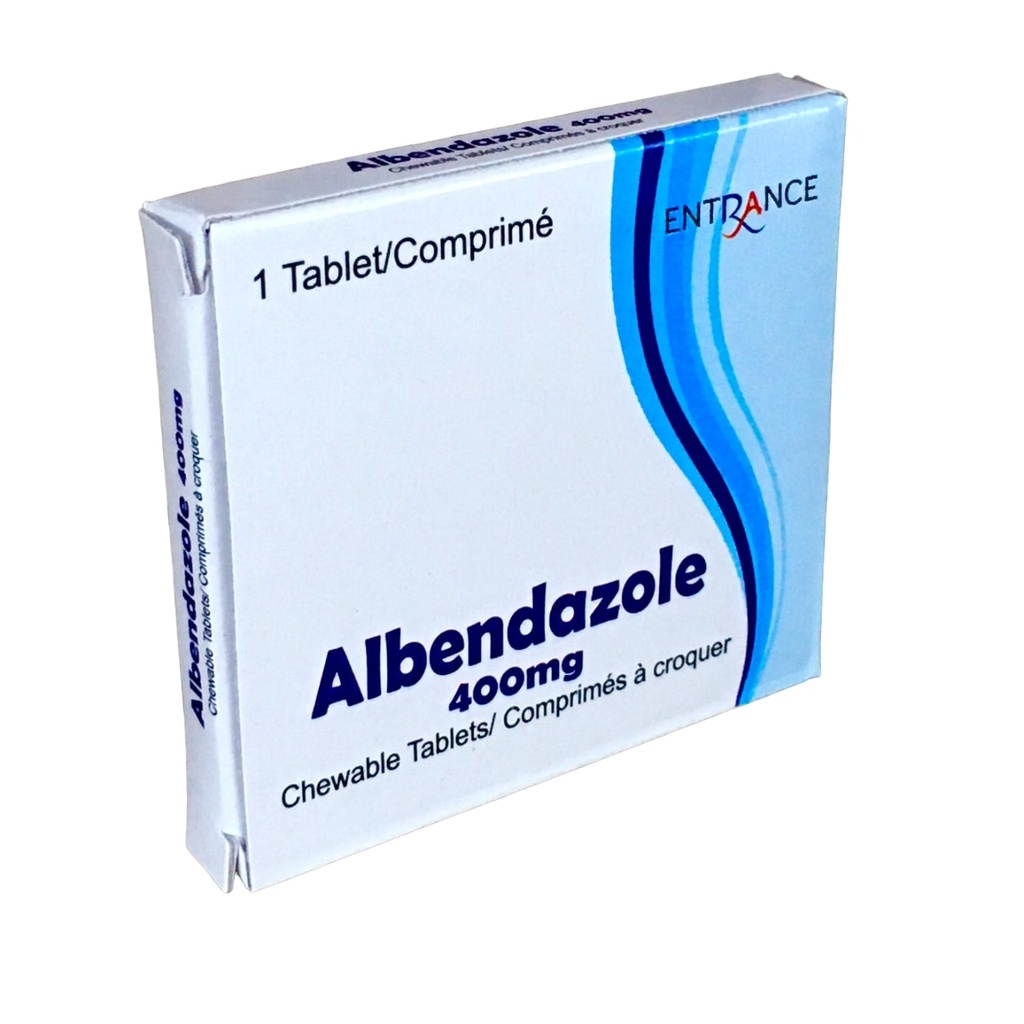
Albendazole 400 mg
Price range: $370.00 through $999.00
| Variation | Price | Quantity | Add To Cart |
|---|---|---|---|
| 180 pills | $550.00 |
|
Add to cart |
| 360 pills | $999.00 |
|
Add to cart |
| 90 pills | $370.00 |
|
Add to cart |
Important notice: Albendazole is a prescription-only medicine in the United Kingdom, the United States and across the European Union. This guide is educational. It does not replace advice from your doctor or pharmacist, and the instructions on your own prescription always take priority over anything written here.
Albendazole 400 mg at a Glance
| Medicine type | Anthelmintic (anti-worm) medicine, benzimidazole class |
|---|---|
| Strength covered | 400 mg tablet |
| Active ingredient | Albendazole |
| Works against | Many intestinal worms, tapeworm larvae and some other parasites |
| Usual route | Oral, best taken with a meal that contains some fat |
| Availability | Prescription only (POM / Rx) in the UK, US and EU |
| Common uses | Roundworm, hookworm, whipworm, threadworm, strongyloidiasis, neurocysticercosis, hydatid disease |
| Key cautions | Pregnancy, liver function, blood counts, drug interactions |
What Is Albendazole 400 mg?
Albendazole 400 mg is a tablet containing a broad-spectrum anti-parasite medicine. It belongs to the benzimidazole family, which also includes mebendazole and fenbendazole. Doctors use it to treat infections caused by parasitic worms (helminths), including worms that live in the gut and the larval stages of certain tapeworms that can form cysts in the liver, lungs and brain.
The 400 mg strength is the standard adult tablet size in many countries. In some markets a 200 mg tablet is also sold, so check the strength carefully when you read a prescription or a pharmacy label, because the number of tablets in a dose depends on which strength you have.
Worm infections are among the most common infections in the world. The World Health Organization estimates that well over a billion people are affected by soil-transmitted worms, mostly in areas with limited sanitation. They are far less common in the UK, US and Europe, but they do occur, especially in children, travellers, migrants, people who work with soil and families who share a household with an infected person.
How Albendazole Works
Albendazole interferes with a protein called tubulin inside the cells of the parasite. Without working tubulin, the worm cannot build the internal scaffolding it needs, and it cannot absorb glucose. Its energy stores run down, and the parasite becomes immobilised and dies. Human cells use a very different form of tubulin, which is why the drug can harm the worm at doses that are generally tolerable for people.
After you swallow a tablet, albendazole is absorbed poorly on an empty stomach. The liver quickly converts it into an active form called albendazole sulfoxide, and this is the compound that does most of the work throughout the body. Fat in a meal can greatly increase how much is absorbed. That matters when the aim is to treat infections in tissue, such as cysts, rather than worms that sit in the gut.
Conditions Albendazole May Be Prescribed For
A clinician decides whether albendazole is suitable after taking your history, examining you and, where appropriate, requesting stool tests, blood tests or scans. Licensed indications differ between countries, and some uses are guideline-supported but outside the product licence. Common uses include the following.
Soil-transmitted helminths
- Roundworm (Ascaris lumbricoides): large worms that live in the small intestine and can cause abdominal pain, poor growth in children and, rarely, blockage.
- Hookworm (Ancylostoma duodenale and Necator americanus): worms that attach to the gut wall and can cause iron-deficiency anaemia through chronic blood loss.
- Whipworm (Trichuris trichiura): causes diarrhoea, abdominal pain and, in heavy infections, rectal prolapse in young children.
- Threadworm or pinworm (Enterobius vermicularis): the most common worm infection in UK and US children, causing night-time anal itching.
Strongyloidiasis
Strongyloides stercoralis can live in the body for decades and can become severe in people who start steroid or immunosuppressant treatment. Ivermectin is usually the first choice, but albendazole may be used in some cases. This is a specialist matter, so seek advice from an infectious disease or tropical medicine team.
Neurocysticercosis
This is an infection of the brain or nervous system with the larval form of the pork tapeworm (Taenia solium). It is a leading cause of acquired epilepsy in some regions. Albendazole is a core drug for treating viable cysts, often with corticosteroids to limit inflammation as the cysts die, and often with an anticonvulsant. Treatment is directed by specialists and sometimes begins in hospital.
Hydatid disease (cystic echinococcosis)
Caused by the larval stage of Echinococcus granulosus, hydatid disease produces slowly growing cysts, most often in the liver or lungs. Albendazole may be given before and after surgery or drainage, or on its own for cysts that cannot be operated on. Courses are long, are given in cycles and require blood monitoring.
Other uses
Some guidelines also include albendazole for giardiasis, certain cases of cutaneous larva migrans (a creeping skin eruption picked up from contaminated sand or soil), microsporidiosis and some filarial infections. These are decisions for a clinician and are not something to self-select.
Recognising Possible Worm Infection
Symptoms depend on the worm. They can include itching around the anus (especially at night), visible worms in stools, abdominal discomfort, bloating, diarrhoea, weight loss, tiredness, pale skin from anaemia, and in children, poor appetite or slow growth. Many infections cause no symptoms at all.
Self-diagnosis is unreliable. Several conditions mimic worm infection, and treating the wrong problem delays proper care. A doctor may ask for stool samples, a sticky-tape test for threadworm eggs, blood tests (including eosinophil counts and iron studies), or imaging if cysts are suspected. Travel history is especially useful information to give.
Typical Adult Dosage Information
The figures below summarise what product information and common guidelines generally state. They are here so that you can recognise an ordinary prescription, not so that you can set your own dose. Your prescriber may change the amount according to your weight, the infection, your liver function and other medicines.
- Roundworm, hookworm, whipworm (single treatment): a single 400 mg dose is the standard regimen in most guidance. Whipworm and heavy infections may need a longer course.
- Threadworm: commonly one 400 mg dose, with a second dose after about two weeks to catch worms that hatch from eggs that survived the first dose.
- Strongyloidiasis: regimens vary and are normally given for several days under specialist supervision.
- Neurocysticercosis: weight-based dosing (commonly around 15 mg/kg a day, split into two doses, with a daily ceiling of 800 mg) for roughly 8 to 30 days, usually with steroids and often anti-seizure medicine.
- Hydatid disease: similar weight-based dosing in 28-day cycles, often with a 14-day break between cycles, for a number of cycles chosen by the treating team.
- Children: dosing in young children depends on age and weight. Albendazole is generally not recommended for children under two years without specialist advice.
How to take the tablets
- Take the tablet with a meal, ideally one containing some fat, when you are treating a tissue infection such as cysts. For simple gut worms, the label may allow it to be taken with or without food, so follow your prescription.
- Swallow the tablet with water. If you or your child cannot swallow it, ask the pharmacist whether it can be chewed, crushed or mixed into food, as this depends on the brand.
- Complete every dose in the course unless a doctor tells you otherwise.
- If you are prescribed a repeat dose after two weeks, put it in your calendar when you collect the first dose.
Missed dose
If you miss a dose in a multi-day course, take it as soon as you remember unless the next one is nearly due. Do not double up. For single-dose treatments, ask your pharmacist what to do if you vomit soon after taking the tablet, since you may need advice on whether the dose was absorbed.
Monitoring During Longer Courses
Short single-dose treatment needs no routine monitoring. Longer courses, especially for neurocysticercosis and hydatid disease, carry a recognised risk of liver enzyme elevation and, rarely, bone marrow suppression. Doctors commonly check liver function tests and a full blood count before starting and at regular intervals, often every two weeks during treatment. Tell your doctor promptly if you develop a fever, a sore throat, unusual bruising, bleeding or yellowing of the skin or eyes.
Possible Side Effects
Most people who take a single dose have few or no problems. Side effects are more common with longer treatment. You can report any suspected reaction through the MHRA Yellow Card scheme in the UK, FDA MedWatch in the US, or your national reporting system in the EU.
Common side effects
- Headache
- Nausea, vomiting or upper abdominal pain
- Dizziness
- Raised liver enzymes on a blood test
- Fever
- Temporary hair thinning during longer courses (reversible)
Serious side effects: seek urgent medical help
- Allergic reaction: swelling of the face, lips or throat, difficulty breathing, hives or a widespread rash.
- Severe skin reactions: blistering, peeling skin or sores in the mouth or eyes.
- Liver problems: yellow skin or eyes, dark urine, severe itching, persistent nausea or right-sided abdominal pain.
- Blood problems: unexplained infections, fever, mouth ulcers, easy bruising or bleeding.
- Seizures or severe headache in someone being treated for neurocysticercosis, which can happen as cysts die and cause inflammation. This is why steroids are often given alongside.
- Visual changes in people with suspected eye involvement, since inflammation may worsen vision.
Who Should Not Take Albendazole
Tell your prescriber before starting if any of the following applies.
- You are allergic to albendazole or other benzimidazoles such as mebendazole.
- You are pregnant, think you may be pregnant or are trying to conceive.
- You have liver disease or have had abnormal liver tests.
- You have a blood disorder or a low white cell count.
- You have epilepsy or a history of seizures (important for neurocysticercosis treatment planning).
- You have retinal lesions, which should be checked before treating suspected neurocysticercosis.
- You are breastfeeding.
Pregnancy, Breastfeeding and Contraception
Pregnancy
Albendazole has caused birth defects and fetal harm in animal studies, and it is generally avoided during pregnancy, especially in the first trimester. If you could become pregnant, product information usually advises a negative pregnancy test before treatment and reliable contraception during treatment and for about a month afterwards. If you find you are pregnant while taking it, contact your doctor straight away.
Breastfeeding
Only small amounts reach breast milk, but caution is advised. Discuss with your clinician whether to delay treatment or use an alternative approach.
Children
Use in children needs correct weight-based dosing. Do not give adult tablets to a child unless you have been specifically told to.
Drug Interactions
Albendazole is broken down by liver enzymes, and several medicines change how much active drug reaches your blood. Always give your prescriber and pharmacist a complete list of what you take, including over-the-counter products, herbal remedies and supplements.
| Medicine | Possible effect |
|---|---|
| Dexamethasone and some other corticosteroids | May raise albendazole levels. This combination is often used deliberately for neurocysticercosis under supervision. |
| Praziquantel | May increase the level of the active albendazole metabolite. |
| Cimetidine | Can increase albendazole levels. |
| Phenytoin, carbamazepine, phenobarbital | May reduce albendazole levels and so reduce its effect. |
| Ritonavir and some other protease inhibitors | May reduce levels of the active metabolite. |
| Theophylline | Levels may change, so monitoring may be needed. |
| Grapefruit juice | May increase absorption. Ask your pharmacist whether to avoid it during treatment. |
This list is not complete. Your pharmacist can run a full interaction check against your medicine list.
Albendazole vs Mebendazole vs Ivermectin vs Praziquantel
People often ask which anti-parasite tablet is best. There is no single winner, because each drug has a different range of activity.
- Albendazole: broad coverage of gut worms and the only widely used drug for tissue cysts such as neurocysticercosis and hydatid disease, alongside praziquantel in some cases.
- Mebendazole: closely related and effective for many gut worms, including threadworm, but it is poorly absorbed and not used for tissue infections. See our guide to mebendazole.
- Ivermectin: first choice for strongyloidiasis, scabies and some filarial infections, but it is less effective against whipworm. See our guide to ivermectin.
- Praziquantel: the main treatment for schistosomiasis and many tapeworm infections.
Choice depends on the parasite identified, local guidelines, pregnancy status and your general health.
Preventing Reinfection
Tablets clear worms already in the body, but they do not stop you picking up new ones. Particularly with threadworm, reinfection within a household is very common, so hygiene steps matter as much as the medicine.
- Wash hands with soap and water after using the toilet, after changing nappies and before eating or preparing food.
- Keep fingernails short and discourage nail-biting and thumb-sucking.
- Wash bedding, night clothes and towels at a high temperature on the day of treatment.
- Vacuum and damp-dust bedrooms, since eggs can survive on surfaces for around two weeks.
- Bathe or shower in the morning to remove eggs laid overnight around the anus.
- Whole-household treatment is often recommended for threadworm, so ask your pharmacist or doctor who in the home should be treated.
- When travelling, drink safe water, wash or peel fruit and vegetables, and avoid walking barefoot on soil or sand in areas where hookworm is common.
- Cook pork thoroughly, since this breaks the tapeworm cycle linked to neurocysticercosis.
Common Myths About Deworming
- “Everyone should deworm every few months.” In the UK, US and EU there is no routine need for regular adult deworming. Treatment is for confirmed or strongly suspected infection.
- “Itching always means worms.” Skin conditions, haemorrhoids, thrush and other issues can cause itching.
- “A single tablet kills every worm and egg.” It acts on adult worms. Eggs may survive, which is why a second dose and good hygiene matter.
- “Animal dewormers are the same thing.” Veterinary products are not formulated, tested or dosed for people. Use only medicines authorised for human use.
How to Get Albendazole Legally in the UK, US and Europe
Because albendazole is prescription-only, you need a prescription from a licensed prescriber who has assessed you. Legitimate routes include your GP or family doctor, a sexual health, travel medicine or infectious disease clinic, a regulated telehealth service that carries out a proper consultation, and a hospital specialist for tissue infections. The prescription is then dispensed by a registered pharmacy.
In some UK pharmacies, a pharmacist can supply treatments for threadworm without a prescription, but those products are usually other medicines. Ask the pharmacist what suits you.
To check that an online pharmacy is genuine, look for these signs.
- UK: the pharmacy is on the General Pharmaceutical Council (GPhC) register and displays the internet pharmacy logo.
- EU: it appears on the national authority’s list of registered sellers and shows the common EU logo.
- US: it is state-licensed and verifiable through the NABP and its .pharmacy programme.
Be cautious of any website that offers prescription anti-parasite tablets with no prescription, no questions or very low prices. Counterfeit and wrongly dosed medicines are a real risk.
Storage and Handling
- Store below 25 °C in the original packaging, away from moisture and light, unless your pack states otherwise.
- Keep out of reach and sight of children.
- Do not use after the expiry date on the pack.
- Return unused tablets to a pharmacy for safe disposal.
Questions to Ask Your Doctor or Pharmacist
- Has a worm infection been confirmed, and which type is it?
- Do I need to take the tablet with food, and what kind?
- Do I need a second dose, and when?
- Should other members of my household be treated?
- Do any of my current medicines interact with albendazole?
- Do I need blood tests before or during treatment?
- When should I expect symptoms to improve, and what should I do if they do not?
Frequently Asked Questions
What is albendazole 400 mg used for?
It treats a range of parasitic worm infections, including roundworm, hookworm, whipworm and threadworm, and it is part of treatment for neurocysticercosis and hydatid cysts.
How quickly does albendazole work?
Worms in the gut are usually killed within a few days, and symptoms such as itching or discomfort often ease within a week. Tissue infections take weeks to months of treatment and follow-up.
Can I take albendazole on an empty stomach?
For gut worms it may be acceptable, but absorption is much better with a fatty meal, and tissue infections need that extra absorption. Follow the instructions on your prescription.
Can I drink alcohol while taking albendazole?
There is no specific ban for a single dose, but alcohol can add to nausea and stress the liver. During longer courses, it is best to discuss alcohol with your doctor.
Is albendazole safe in pregnancy?
It is generally avoided, particularly early in pregnancy. Tell your doctor if you are pregnant or planning a pregnancy.
Do I need to treat my family?
For threadworm, it is common practice to treat everyone in the household at the same time. For other infections, your clinician will advise based on the parasite.
Can I buy albendazole without a prescription?
Not legally in the UK, US or EU. Genuine supply needs a prescription from a licensed prescriber and a registered pharmacy.
Is albendazole the same as the dewormer used for animals?
The active ingredient may overlap with some veterinary products, but only human-licensed medicines should be used by people. Animal products differ in formulation, dose and quality control.
What should I do if I take too much?
Seek urgent help. In the UK call 111 or 999, in the US call Poison Control on 1-800-222-1222 or 911, and in the EU call 112. Bring the packaging with you.
Key Takeaways
- Albendazole 400 mg is a prescription anti-parasite tablet for worm infections and tissue cysts.
- Take it with food as instructed, and complete any repeat dose.
- Avoid it in pregnancy and use reliable contraception when advised.
- Longer courses need blood and liver monitoring.
- Good hygiene prevents reinfection and is as important as the medicine.
- Only obtain it through a licensed prescriber and a registered pharmacy.
Related Guides
- Mebendazole: uses, dosage and side effects
- Ivermectin: uses, dosage and side effects
- Clarithromycin 250 mg: uses, dosage and side effects
- Azithromycin 250 mg: uses, dosage and side effects
Internal links above are placeholders. Replace them with the real URLs and question/post pages from your sitemaps.
Trusted External Sources
- NHS: Threadworms
- MedlinePlus: Albendazole
- electronic Medicines Compendium (UK product information)
- WHO: Soil-transmitted helminth infections
- CDC: Parasites
- MHRA Yellow Card scheme
- FDA MedWatch
Medical disclaimer: This content is for general information only and is not medical advice, a diagnosis or a recommendation to buy or use any medicine. Do not start, change or stop a medicine without consulting a qualified healthcare professional. Product availability depends on local law and requires a valid prescription.
| Select Variation |
360 pills ,180 pills ,90 pills |
|---|




Reviews
There are no reviews yet.