
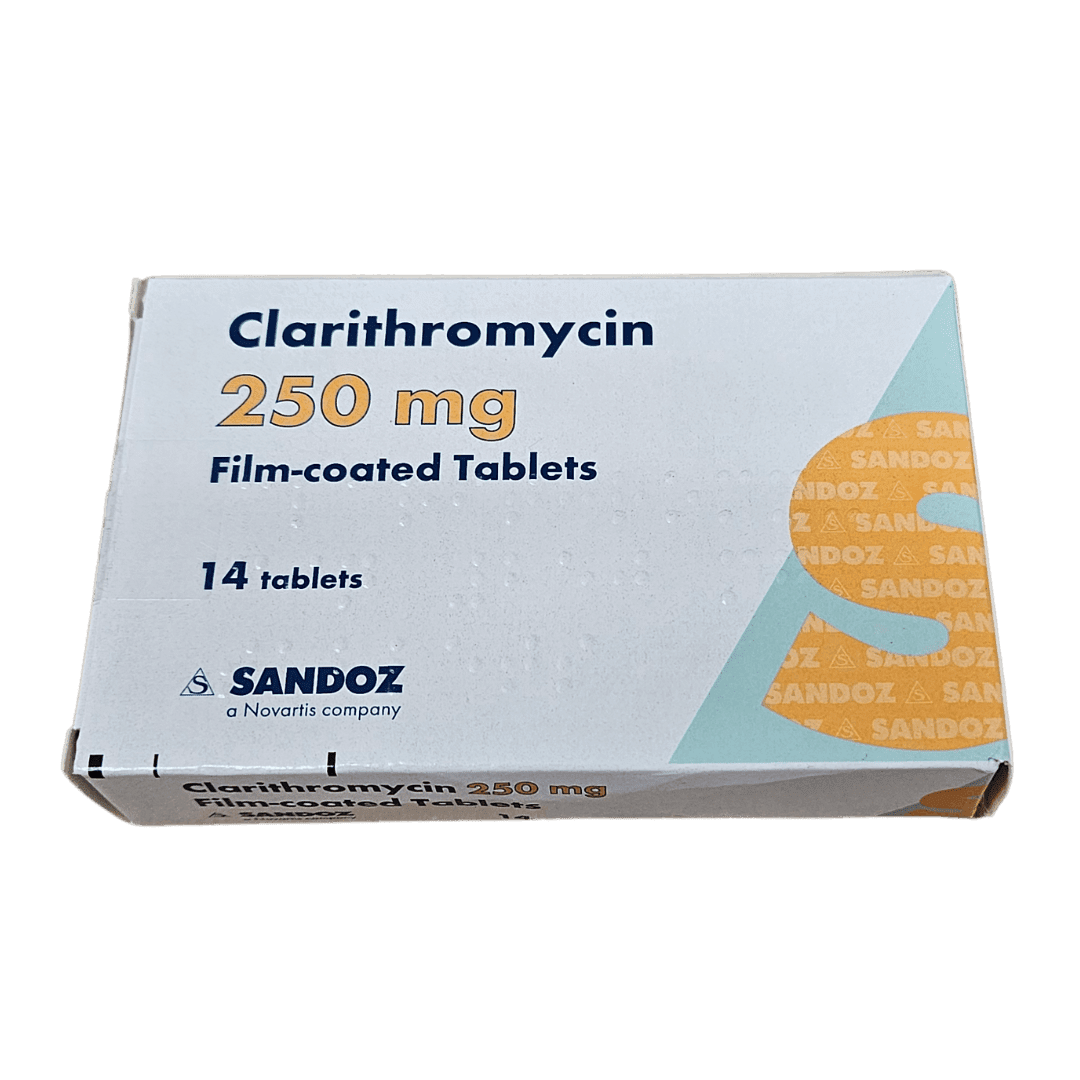
Clarithromycin 250 mg
Price range: $360.00 through $979.00
| Variation | Price | Quantity | Add To Cart |
|---|---|---|---|
| 180 pills | $540.00 |
|
Add to cart |
| 360 pills | $979.00 |
|
Add to cart |
| 90 pills | $360.00 |
|
Add to cart |
Important notice: Clarithromycin is a prescription-only antibiotic in the United Kingdom, the United States and across the European Union. This guide is educational. It does not replace advice from your doctor or pharmacist, and the dose on your own prescription always takes priority over anything written here.
Clarithromycin 250 mg at a Glance
| Medicine type | Macrolide antibiotic |
|---|---|
| Strength covered | 250 mg film-coated tablet |
| Active ingredient | Clarithromycin |
| Works against | Susceptible bacteria only (not viruses) |
| Usual route | Oral, with or without food |
| Availability | Prescription only (POM / Rx) |
| Common uses | Chest, throat, sinus and skin infections; part of some H. pylori regimens |
| Key cautions | Heart rhythm, liver, many drug interactions, pregnancy |
What Is Clarithromycin 250 mg?
Clarithromycin 250 mg is a tablet containing a semi-synthetic antibiotic derived from erythromycin. It belongs to the macrolide family, a group of medicines that stop bacteria from making the proteins they need to grow and multiply. Because the bacteria can no longer build those proteins, their numbers fall and the immune system can clear the remaining infection.
The 250 mg strength is the lower of the two common tablet sizes (the other is 500 mg). Prescribers often choose it for standard adult courses, for people who need a reduced dose because of reduced kidney function, and for regimens where the daily total is split into two doses.
Clarithromycin is known under several brand names around the world, and generic versions are widely used. In the UK it has long been a standard option for people with a penicillin allergy who need treatment for a respiratory infection, which is one reason it remains a regular fixture in primary care guidelines.
How Clarithromycin Works
Bacteria build proteins on structures called ribosomes. Clarithromycin attaches to the 50S subunit of the bacterial ribosome and blocks the chain of events that lets new proteins form. Human cells use a different ribosome design, which is why the drug can target bacteria while leaving your own cells largely unaffected.
At typical doses, clarithromycin is bacteriostatic against many organisms, meaning it halts growth rather than killing outright, although it can be bactericidal against some. It concentrates well in lung tissue and inside cells, which helps explain its usefulness for infections of the airways and for organisms that hide inside cells.
It is important to remember that antibiotics have no effect on viruses. Colds, most sore throats, most cases of acute bronchitis and influenza will not respond, and taking an antibiotic for them only adds side effects and encourages resistance.
Conditions Clarithromycin May Be Prescribed For
A clinician decides whether clarithromycin is appropriate after considering your symptoms, test results, allergies, other medicines and local resistance patterns. Licensed and guideline-supported uses vary slightly between countries, but they generally include the following.
Respiratory tract infections
- Community-acquired pneumonia, often as an alternative when a penicillin cannot be used, or alongside another antibiotic in more significant illness.
- Acute exacerbations of chronic bronchitis, when a bacterial cause is suspected.
- Acute bacterial sinusitis that has not improved or is clearly bacterial.
- Pharyngitis and tonsillitis caused by susceptible streptococci.
Skin and soft tissue infections
Mild to moderate infections such as impetigo-type skin infections, folliculitis and cellulitis may be treated with clarithromycin when the likely organisms are sensitive and a first-choice antibiotic is unsuitable.
Helicobacter pylori eradication
Helicobacter pylori is a stomach bacterium linked to peptic ulcers and chronic gastritis. Clarithromycin is one component of triple therapy, usually combined with a proton pump inhibitor (a stomach-acid reducer) and a second antibiotic such as amoxicillin or metronidazole. Resistance to clarithromycin is now common in some regions, so many guidelines advise checking local resistance rates or previous macrolide use before choosing this regimen.
Mycobacterial infections
Specialists also use clarithromycin as part of combination therapy for Mycobacterium avium complex (MAC) infections, particularly in people with weakened immune systems. This is specialist-led treatment and is never self-directed.
Other uses
Dental infections and certain atypical pneumonia organisms, such as Mycoplasma pneumoniae and Legionella, are additional settings in which a macrolide may be considered. Your prescriber will advise you if one of these applies.
Typical Adult Dosage Information
The figures below describe what product information and common guidelines generally state for adults. They are provided so you can recognise a normal prescription, not so you can set your own dose. Your doctor may adjust the amount for your weight, kidney function, infection type or other medicines.
- General adult dose: commonly 250 mg twice daily, which may be increased to 500 mg twice daily for more severe infections.
- Usual course length: often 6 to 14 days, depending on the condition.
- H. pylori regimens: doses and durations are set by regional guidelines, commonly 500 mg twice daily with other drugs for 7 to 14 days.
- Reduced kidney function: people with severe renal impairment (creatinine clearance below 30 mL/min) are usually given a lower dose, often halved.
- Children: paediatric doses are calculated by body weight and usually given as a liquid. Never give adult tablets to a child unless a prescriber has specifically told you to.
How to take the tablets
- Swallow the tablet whole with a glass of water. Do not crush or chew it unless your pharmacist says the specific brand permits it.
- Take doses roughly 12 hours apart, for example morning and evening, to keep a steady level in the blood.
- You may take it with or without food. Taking it with a meal can ease nausea.
- Finish the full course your prescriber gave you unless you are told to stop, even if you feel better after a few days.
Missed dose
If you miss a dose, take it as soon as you remember. If it is nearly time for the next dose, skip the missed one and carry on as normal. Never double up to catch up.
Possible Side Effects
Most people tolerate clarithromycin well, but every medicine can cause side effects. Reporting them helps regulators monitor safety: in the UK you can use the MHRA Yellow Card scheme, and in the US the FDA MedWatch programme.
Common side effects
- Altered or metallic taste
- Nausea, vomiting or indigestion
- Diarrhoea or stomach pain
- Headache
- Difficulty sleeping
- Abnormal liver blood test results
Serious side effects: seek urgent medical help
- Allergic reaction: swelling of the face, lips or throat, difficulty breathing, widespread rash.
- Severe skin reactions: blistering, peeling skin or mouth ulcers.
- Heart rhythm problems: palpitations, fainting or a very fast or irregular heartbeat. Clarithromycin can prolong the QT interval.
- Liver problems: yellowing of the skin or eyes, dark urine, severe tiredness, pale stools or upper abdominal pain.
- Severe or persistent diarrhoea: especially if bloody, which can signal Clostridioides difficile infection. Do not take anti-diarrhoea tablets without medical advice.
- Muscle pain or weakness, particularly if you also take a statin.
- Hearing changes or confusion, which are uncommon but reported.
Who Should Not Take Clarithromycin
Tell your prescriber before starting if any of the following applies.
- You are allergic to clarithromycin, erythromycin, azithromycin or any other macrolide.
- You have a history of QT prolongation, a slow heart rate, low potassium or magnesium, or a heart rhythm disorder.
- You have significant liver disease, or severe kidney impairment (a dose change is usually needed).
- You have previously developed jaundice or liver problems on a macrolide.
- You take medicines that are specifically contraindicated with clarithromycin (see below).
- You have myasthenia gravis, as macrolides can worsen muscle weakness.
Drug Interactions: The Most Important Safety Topic
Clarithromycin is a strong inhibitor of an enzyme called CYP3A4 and also affects the P-glycoprotein transporter. That means it can raise the blood level of many other medicines, sometimes to harmful levels. This is the single most common reason a pharmacist or doctor will change a prescription or recommend a different antibiotic.
| Medicine group | Why it matters |
|---|---|
| Simvastatin, lovastatin, atorvastatin | Higher statin levels raise the risk of serious muscle damage (rhabdomyolysis). Simvastatin and lovastatin are generally contraindicated; the statin is usually paused during the course. |
| Colchicine | Risk of toxicity, particularly in people with kidney or liver problems. |
| Warfarin and other anticoagulants | Bleeding risk can rise. Extra INR monitoring is usually needed. |
| Ergot alkaloids | Combination is contraindicated because of the risk of serious vascular spasm. |
| QT-prolonging drugs (some antipsychotics, antiarrhythmics, citalopram, quinolones) | Additive effect on heart rhythm. |
| Carbamazepine, phenytoin, valproate | Levels may increase, causing toxicity. |
| Digoxin | Higher digoxin levels and a risk of toxicity. |
| Theophylline | Raised levels can cause nausea, palpitations or seizures. |
| Some sedatives (e.g. midazolam, triazolam) | Stronger and longer sedation. |
| Certain HIV medicines, immunosuppressants (ciclosporin, tacrolimus) | Dose adjustment and monitoring are normally needed. |
| Ticagrelor, some newer anticoagulants | Concentrations may rise; combination is often avoided or monitored. |
This table is not exhaustive. Always give your doctor and pharmacist a full list of everything you take, including over-the-counter products, herbal remedies such as St John’s wort, and supplements.
Pregnancy, Breastfeeding and Special Groups
Pregnancy
Clarithromycin is generally avoided in pregnancy unless the benefit clearly outweighs the risk, particularly in the first trimester, because some animal and observational data have raised concerns. Alternatives are usually preferred. If you are pregnant or planning pregnancy, tell your prescriber before starting.
Breastfeeding
Small amounts pass into breast milk. Short courses are often considered acceptable, but the baby should be watched for diarrhoea, thrush or poor feeding, and you should discuss it with your healthcare professional.
Older adults
Older adults are more likely to take several medicines and to have reduced kidney function or underlying heart conditions, so interaction checks and dose review are especially important.
Driving
Dizziness, confusion or disorientation have been reported. Until you know how the medicine affects you, avoid driving or operating machinery.
Clarithromycin vs Azithromycin vs Erythromycin
All three are macrolides, and people often ask which is better. The honest answer is that it depends on the infection and the person.
- Clarithromycin: twice-daily dosing, strong activity against many respiratory pathogens and H. pylori, but more drug interactions.
- Azithromycin: once-daily and often a shorter course, with fewer interactions, but it is less useful in H. pylori regimens.
- Erythromycin: the older option, usually more gastrointestinal upset, often used in pregnancy or for specific indications.
Read more in our guide to azithromycin 250 mg and our overview of amoxicillin 500 mg, a common penicillin-class alternative.
Antibiotic Resistance and Responsible Use
Resistance to macrolides is rising worldwide. Overuse of antibiotics, skipped doses and incomplete courses all push resistance higher. The World Health Organization lists antimicrobial resistance among the top global public health threats, and health authorities in the UK, US and EU run stewardship programmes to keep antibiotics working.
You can help by taking antibiotics only when prescribed, following the instructions exactly, never saving leftover tablets for later, and never sharing them. If symptoms are not improving after two to three days, or they worsen, contact your prescriber rather than extending the course yourself.
How to Get Clarithromycin Legally in the UK, US and Europe
Because clarithromycin is prescription-only, you need a valid prescription from a licensed prescriber who has assessed you. Legitimate routes include:
- Your GP, family doctor or an urgent care or walk-in clinic.
- A regulated online doctor or telehealth service that carries out a proper consultation and issues a prescription.
- A registered community or online pharmacy that dispenses against that prescription.
To check an online pharmacy is genuine, look for these signs.
- UK: the pharmacy appears on the General Pharmaceutical Council (GPhC) register and displays the internet pharmacy logo.
- EU: the national authority’s list of registered sellers and the common EU logo.
- US: a state-licensed pharmacy, verifiable through the NABP and its .pharmacy domain programme.
Be cautious of any website offering prescription antibiotics with no prescription, no consultation or suspiciously low prices. Such products may be counterfeit, wrongly dosed or contaminated.
Storage and Handling
- Store below 30 °C in the original packaging, away from moisture and direct light.
- Keep out of reach and sight of children.
- Do not use after the expiry date printed on the pack.
- Return unused tablets to a pharmacy for safe disposal rather than throwing them in household waste or the toilet.
Tips for Getting the Most from Your Course
- Set phone alarms so doses are evenly spaced.
- Take it with food if it upsets your stomach.
- Drink plenty of fluids, especially if you have diarrhoea.
- Consider a probiotic yoghurt only if your pharmacist agrees, and keep it a few hours apart from the dose.
- Pause statins or other flagged medicines only on your prescriber’s instruction.
- Book a follow-up if symptoms persist after the course ends.
Frequently Asked Questions
What is clarithromycin 250 mg used for?
It is used for susceptible bacterial infections such as chest infections, sinusitis, tonsillitis and some skin infections, and as part of combination treatment for H. pylori. It does not treat viral illnesses.
How long does clarithromycin take to work?
Many people notice improvement within two to three days, but you must complete the full course. Stopping early can let the infection return and encourage resistance.
Can I drink alcohol while taking clarithromycin?
There is no strict ban, but alcohol can worsen nausea, dizziness and stomach upset, and it may slow recovery. Most clinicians suggest avoiding it until you feel well.
Can I take clarithromycin with a statin?
Often not without changes. Simvastatin and lovastatin are generally contraindicated, and other statins may need to be paused. Ask your pharmacist before the first dose.
Is clarithromycin safe in pregnancy?
It is usually avoided unless there is no better option. Discuss alternatives with your prescriber if you are pregnant or trying to conceive.
Does clarithromycin affect birth control pills?
Clarithromycin is not known to reduce the effectiveness of combined oral contraceptives in the way that enzyme-inducing drugs do, but vomiting or severe diarrhoea can. If either occurs, follow the missed-pill advice in your contraceptive leaflet.
What happens if I stop clarithromycin early?
The infection may not be fully cleared and may return with bacteria that are harder to treat. Speak to your prescriber before stopping unless you are having a serious reaction, in which case seek urgent care.
Can I buy clarithromycin without a prescription?
Not legally in the UK, US or EU. Genuine supply requires a prescription from a licensed prescriber, dispensed by a registered pharmacy.
What should I do if I overdose?
Seek urgent help. In the UK call 111 or 999, in the US call Poison Control on 1-800-222-1222 or 911, and in the EU call 112. Take the packaging with you.
Key Takeaways
- Clarithromycin 250 mg is a prescription macrolide antibiotic for susceptible bacterial infections.
- Doses are set by your prescriber; always finish the course as directed.
- Interactions, especially with statins, colchicine, warfarin and QT-prolonging drugs, are the major safety issue.
- Seek urgent help for allergic reactions, fainting, palpitations, jaundice or severe diarrhoea.
- Only obtain it through a licensed prescriber and a registered pharmacy.
Related Guides
- Azithromycin 250 mg: uses, dosage and side effects
- Amoxicillin 500 mg: uses, dosage and side effects
- Doxycycline 100 mg: uses, dosage and side effects
- Clindamycin 150 mg: uses and safety
Internal links above are placeholders. Replace them with the real URLs and question/post pages from your sitemaps.
Trusted External Sources
- NHS: Clarithromycin
- MedlinePlus: Clarithromycin
- electronic Medicines Compendium (UK product information)
- WHO: Antimicrobial resistance
- MHRA Yellow Card scheme
- FDA MedWatch
Medical disclaimer: This content is for general information only and is not medical advice, a diagnosis or a recommendation to buy or use any medicine. Do not start, change or stop a medicine without consulting a qualified healthcare professional. Product availability depends on local law and requires a valid prescription.
| Select Variation |
360 pills ,180 pills ,90 pills |
|---|




Reviews
There are no reviews yet.