
Codeine vs Oxycodone For Pain: The Ultimate Battle Between Opioids

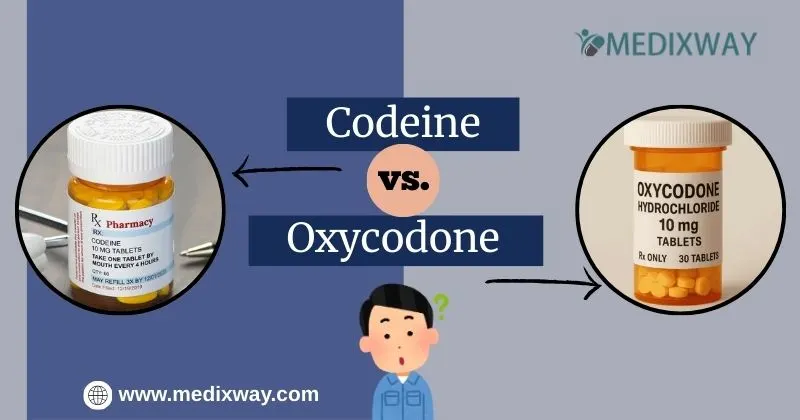
Pain is a feeling that no one wants to experience. But sometimes due to changing life habits, health conditions, post-operation, work, or unknowingly, most of the people face pain signals ranging from minor to very serious. When the discussion is about serious pain, two medications are always compared: Codeine vs Oxycodone. Doctors suggest these two medicines to almost everyone when other painkillers are not helping the pain condition in patients. So in today’s blog, we will understand what are these two drugs and how they help individuals facing pain. The aim is not to decide which is stronger, Codeine or Oxycodone, but to make you feel confident about knowing the important information regarding these two drugs.
Codeine vs Oxycodone: Key Differences, Side Effects, And Usage Considerations
Overview of Codeine and Oxycodone
Codeine is a pain-killing medicine that is naturally derived from the poppy plant. This medication can also be made in a laboratory by synthesizing Morphine. It is mainly used to treat very mild to medium-level pain. Codeine is an opioid, so it is only prescribed when other medications that are non-opioids do not work on the patient’s pain level. This drug is also called as a prodrug because it is the main agent in syrups used to treat cough.
Oxycodone is also a painkiller, which is a semi-synthetic drug. It means it is man-made, but its formulation is derived from natural resources like thebaine. This drug is considered to be a medium-potential drug, which is more potent than Codeine. It is suggested for patients who are suffering from a moderate to severe level of pain and no other painkiller is helping them with their health conditions.
Street Names of Codeine vs Oxycodone
Street names are the names that are used to sell and purchase any kind of scheduled drug, by going against the law illegally. Drug abusers are the people who do this work and sell these drugs to other drug abusers to make money. Likewise, Codeine and Oxycodone are used illegally by some misusers, and they buy these drugs through various street names. Such as;
Street Names of Codeine
- Cody
- Little c
- Captain Cody
- Lean
- Syrup
- Texas tea
- Sizzup
- Purple drank
Street Names for Oxycodone
- Kickers
- O.C.
- Beans
- Roxy
- M30s
- Blues
- Hillbilly Heroin
- Percs
Are Codeine And Oxycodone The Same?
Codeine and Oxycodone are two different medications that have a similar working process because both the drugs belong to the same drug class. Another similarity is that whether it is Codeine or Oxycodone, both have off-label uses. But their origin, primary use, and potential make them different and unique from each other. As both the medications are opioids, they work by attaching themselves to the opioid receptors in the brain and spinal cord. This interaction blocks the transmission of pain signals and also helps to perceive the pain signals in a different way. Both medicines also share similar side effects.
What is the difference between codeine and oxycodone?
Understanding the differentiating factors between Codeine and Oxycodone is important. Because many people may think they are the same because of the same working process. There are some factors that make them apart from each other. Let’s see those factors in brief.
| Features | Codeine | Oxycodone |
| Brand name | Panadeine Forte, Tuxarin ER, Nurofen Plus | Xtampza ER, Oxaydo, Roxicodone, Oxycontin |
| Potency | Weak | Strong |
| Synthesis | Naturally derived from Morphine | Semi-synthetic Opioid |
| Type of pain treated | Minor to moderate | Moderate to major |
| Drug schedule | Schedule II, III, and IV | Schedule II |
| Start Working within | 30 to 60 minutes | 10 to 15 minutes |
| peak effect | 60 to 90 minutes | 30 minutes to 5 hours |
| Duration of effect | 4 to 6 hours | 3 to 12 hours |
| Pediatric Use | Restricted | Can be used on children |
| Formulation Working Type | Short-acting | Both short and long-acting |
| Bioavailability | 20% | >60% |
| Risk of addiction | Less addictive | More addictive |
Can You Take Codeine And Oxycodone Together?
No, you should never mix two powerful opioid medicines like Codeine and Oxycodone. Even the FDA has an official warning for not mixing opioid medications with other opioids or nervous system depressants. Both of the medicines are potential painkillers of opioid type, which depress the central nervous system. So, combining them can directly affect the side effects. There are serious risks linked to the combination of Oxycodone and Codeine. Such as;
- Overdose
- Extreme sleepiness
- Loss of consciousness
- Coma
- Dangerously slow breaths
- Clammy skin
- Pinpoint pupils
- Addiction
- Permanent brain damage
- Death
Which is Better, Codeine or Oxycodone?
Only by the medicine’s name no one can say that one medicine is better than the other. To understand which is a better medicine, we need to understand what is Oxycodone and Codeine, and the Codeine vs Oxycodone strength. Codeine is a medication that is a milder opioid, and Oxycodone is a more potent painkiller medicine. They are different opioids used for varying levels of pain and carry different risk profiles. Ultimately, the better choice between these two drugs is fully dependent on the patient’s specific medical needs and the level of their pain.
How Long Does Codeine And Oxycodone Stay in the System?
Opioids can be found in our system for more time than the half-life of the drug. Oxycodone and Codeine can leave their traces in an individual’s urine, blood, saliva, and even in hair. The holding time of the drug inside the system can vary from one person to another. The staying period of the drug inside the system can be affected by an individual’s health factors.
| Drug Screening | Codeine | Oxycodone |
| Saliva | 24-48 hours | 1 to 2 days |
| Blood | 24 hours | Up to 24 hours |
| Urine | 24 to 72 hours | 48 hours to 4 days |
| Hair | Up to 90 days | Up to 90 days |
Side Effects
Both medications carry some common and serious side effects. They have a lot of similar side effects. It is notable that mild side effects can be treated at home with care only. But severe side effects can only be treated by a doctor. Now, let’s see what the common side effects of both drugs are.
- Sedation
- Lightheadedness
- Nausea
- Constipation
- Itching
- Dry mouth
- Drowsiness
- Rash
Serious Side Effects
- Overdose
- Extreme hypotension
- Adrenal Issues
- Serotonin problem
- Breaths getting shallow
- Withdrawal Signs
Usage Considerations
The individuals taking these medications need to be more careful and responsible while taking these drugs. There are some safety measures to follow before and while taking these medicines.
- You should not take these pills without talking to your doctor.
- Before your doctor prescribes you any of the above drugs, you must tell your doctor about your medical history.
- Follow the prescription of your doctor religiously.
- Take your medications on time regularly.
- Avoid using alcohol while using any medication for any health issue.
- Do not stop taking the pills on your own without asking your doctor.
Conclusion
Finally, at the end of the blog, we hope you understood how Codeine and Oxycodone are two different types of medicines. Always follow what your doctor asks, it will help you to stay safe and avoid any danger signals. Make some healthy changes in your daily habits to get relief from pain naturally.