
Buspar vs Xanax For Anxiety Treatment: What’s Key Differences, Benefits & Risks

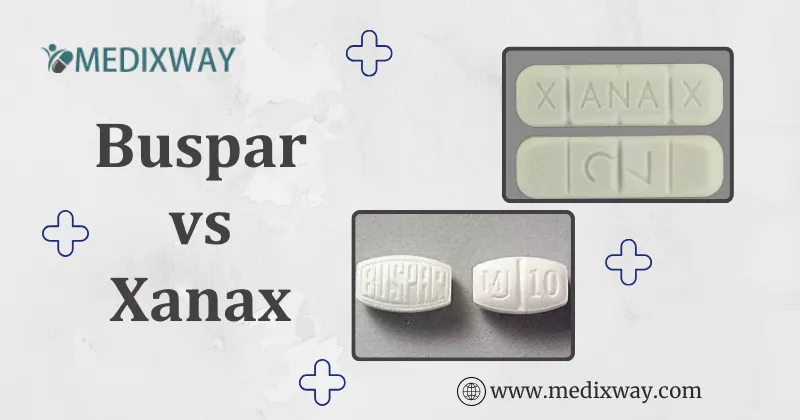
Doctors can prescribe two of the best medications to anxiety patients who are looking for an effective remedy for their issue, and they are Buspar and Xanax. One can get Buspar in the market by the name Buspirone, but Xanax is available abundantly. Both are different drugs and have different can have different mechanisms, but Xanax and Buspar are highly effective in treating anxiety. Many patients think both are the same drug, and many believe they can be taken together. In this blog, we will not just learn which is better between Buspar vs Xanax, but also gain knowledge of how they can bring with them side effects if they are overdosed.
Buspar vs Xanax: Which is a Better Medication For Anxiety?
What is Buspar?
Buspar, now better known as Buspirone, is an anti-anxiety or anxiolytic drug used by patients to treat anxiety. It is now available under new brand names like Bustab, Buspirex, Vanspar, and Bucapsol. Buspar affects and treats our anxiety problems by relaxing us and making us feel a sensation of calmness due to the two chemicals it releases during its mechanism. Buspar binds with dopamine and serotonin receptors, which then release their neurotransmitters into the brain, making the patient feel euphoric. It is not an abusive drug in general, which is why it is not a controlled drug, but Buspar can only be used under a doctor’s prescription.
What is Xanax?
Xanax is another anti-anxiety drug found abundantly to treat conditions generalized anxiety disorders (GAD). It is also called Alprazolam, and is found in both immediate-release (IR) and extended-release (XR) forms. It also has some off-label uses, like treating sleeping problems and helping one during panic attacks. As a benzodiazepine, Xanax is a stronger anxiolytic and is also a Schedule IV controlled drug with high potential for abuse. Xanax might have a similar mechanism to Buspar. Yet, it acts differently as the GABA (gamma-aminobutyric acid) receptors in the nervous system bind with it and release their neurotransmitters into the brain. This helps a patient calm down and feel relaxed.
Are Buspar and Xanax The Same Medication?
Xanax and Buspar are two different drugs, but both definitely share some similarities. One of the most striking similarities is that both are anti-anxiety medicines that treat various anxiety-related issues. Another similarity is that whether it is Buspar or Xanax, both have off-label uses, some of them being helping children deal with anxiety, and also mixing with other drugs to treat depression. Using Xanax and Buspar will give a patient similar effects of relaxation, calmness, and euphoria. This means both can have similar side effects if the medicines are overdosed, though Buspar has less potential for abuse compared to Xanax.
What is The Difference Between Buspar and Xanax?
Differences between Buspar and Xanax span many categories, like drug class, mechanism, onset, and so on. While they had their similarities, Xanax and Buspar differ much more than a patient expects them to. Let us take a look at some of the differences:
- Buspar and Xanax have different drug classes and statuses. Xanax is a benzodiazepine, a controlled drug, whereas Buspar is an anxiolytic, non-controlled substance.
- Both have similar mechanisms, but the difference is that Buspar releases dopamine and serotonin, while Xanax releases neurotransmitters of GABA receptors.
- The two medicines have a huge difference in onset time, as Xanax starts working within 30-40 minutes, but Buspar takes almost 2-4 weeks of continuous dosing to show its full effect.
- Xanax can have more interactions with drugs because it is highly potent for abuse, while Buspar also has interactions with other drugs, yet its potential is much less and not concerning.
Side Effects of Buspar and Xanax
The side effects of Xanax and Buspar are mostly similar, but because Xanax is a controlled substance, it can have much more serious consequences if one overdoses on it. On the other hand, Buspar has relatively common side effects, not so serious. Let’s understand these side effects separately.
Buspar Side Effects:
- Nausea
- Insomnia
- Panic Attacks
- Tiredness
- Anxiety
- Dizziness
- Headaches
Xanax Side Effects:
- Drowsiness
- Sleepiness
- Tiredness
- Slurred Speech
- Nausea
- Vomiting
- Seizures
- Diarrhea
- Headache
Can You Take Buspar and Xanax Together?
Together, Buspar and Xanax can be very risky. Patients have to consult a doctor before trying to mix the two doses. A doctor can suggest taking them together in small quantities, but one should do it on their own. The risks that this combination involves are quite serious, as both Xanax and Buspar can increase sedation, as feeling drowsy is one of their side effects. Similarly, this can also lead to issues like severe breathing issues, difficulty in moving properly, amplified anxiety and stress, and the most dangerous repercussion possible is depression in the central nervous system, which can lead to coma or even death.
Buspar vs Xanax Drug Interactions
We know now that Xanax and Buspar can interact with each other. Let us take a look at other drugs these two medicines can react with:
Buspar Interactions:
Xanax Interactions:
Conclusion
When we talk about fighting issues that come along with anxiety, Xanax and Buspar are the best solutions to those problems. Anxiety disorder causes immense harm to someone’s mental health, and no one deserves to live with it. Safe consumption of both drugs, as advised by the healthcare professionals, will definitely help people get rid of anxiety.