Health Tips
Ambien vs Ambien CR: Sleep-Onset and Night-Awakening Differences

Maya gets into bed at 11 p.m. and is still staring at the ceiling at 1 a.m. Once she finally drifts off, she sleeps until her alarm. Dev has the opposite night. He falls asleep within minutes, then wakes at 3 a.m. with his mind racing and lies there until dawn.
Both of them might walk out of a doctor’s office with a zolpidem prescription. But the Ambien vs Ambien CR question is really a question about which of those two nights you are having. The two tablets contain the same medicine. What differs is how that medicine reaches your bloodstream over the hours you are asleep, and that difference was designed around two different sleep problems.
This guide walks through a night hour by hour, explains how the CR tablet is built, looks at what each drug’s studies actually measured, and ends with a decision list you can bring to your prescriber. It also covers the stronger next-morning warning that comes with the extended-release version.
Same drug, different delivery
Ambien is immediate-release zolpidem tartrate. Ambien CR is controlled-release (extended-release) zolpidem tartrate. Both act on the same brain receptors (the GABA-A system) to quiet activity and bring on sleep. Generic versions of both exist, so everything below applies to generic zolpidem and zolpidem ER as well.
The FDA label for each drug states its purpose plainly. Ambien is approved for short-term treatment of insomnia marked by trouble with sleep initiation, meaning falling asleep. Ambien CR is approved for insomnia marked by trouble with sleep onset and/or sleep maintenance, meaning falling asleep, staying asleep, or both. That one phrase, “sleep maintenance,” is the heart of the Ambien vs Ambien CR story.
An hour-by-hour night: Ambien vs Ambien CR in your bloodstream
Lab charts of drug levels can look abstract, so here is the same information told as a story of one night. Picture a person who takes a dose at 11:00 p.m. on an empty stomach and plans to wake at 7:00 a.m. The figures come from the pharmacokinetics sections of the two FDA labels, which report averages from healthy volunteers. Your own curve will differ with age, sex, liver function, other medicines, and what you ate.
11:00 p.m. to midnight: the climb
Both tablets start the same way. Zolpidem is absorbed quickly, and blood levels rise steeply in the first hour. The CR label says its early absorption is rapid and similar to immediate-release zolpidem. That is on purpose: the outer layer of the CR tablet is itself an immediate-release dose. So in this first hour, a person on either tablet should start to feel drowsy, and both labels warn you to be in bed, not finishing chores.
Around 12:30 a.m.: the peak
Plain Ambien reaches its average peak about 1.6 hours after the dose. Ambien CR reaches its peak at about 1.5 hours, which is basically the same time. In the label studies, a 10 mg Ambien dose peaked near 121 ng/mL and a 12.5 mg Ambien CR dose peaked near 134 ng/mL. So the CR tablet does not arrive later. It arrives at the same time and then behaves differently afterward.
1:00 a.m. to 3:00 a.m.: the fork in the road
This is where the two curves split. With immediate-release Ambien, nothing more is being released once the tablet is absorbed, so the level starts falling. The half-life is about 2.5 hours, which means the amount in your blood roughly halves every two and a half hours. By about 3:00 a.m., a person on plain Ambien has close to half of their peak level left, and it keeps sliding.
With Ambien CR, the inner layer is still dissolving. The label describes this as plasma concentrations that stay extended beyond three hours after the dose. In everyday terms, the CR curve flattens into a plateau instead of turning sharply downward. This is the window that matters for someone like Dev, whose trouble starts in the small hours.
3:00 a.m. to 5:00 a.m.: the sleep-maintenance zone
For immediate-release Ambien, levels by now are well below the peak. Many people sleep straight through anyway, because once sleep is established it often carries itself. But someone prone to early awakenings has less drug support during these hours.
Ambien CR is designed to cover this stretch better. Its terminal half-life (about 2.8 hours) is only a little longer than plain Ambien’s, so the extra coverage does not come from the body clearing it more slowly. It comes from the delayed release of the second layer, which keeps topping up the supply for longer.
7:00 a.m.: the alarm, and what is left over
Here is the Ambien vs Ambien CR trade-off. A tablet built to keep levels up through the night is also more likely to leave some drug on board in the morning. In 2013, the FDA reported that about 8 hours after a dose, roughly 15% of women and 3% of men who took 10 mg of immediate-release zolpidem still had blood levels above 50 ng/mL, a level that can impair driving. For 12.5 mg of extended-release zolpidem, the figures were about 33% of women and 25% of men. We return to this in the next-morning section, and our guide to how long Ambien stays in your system covers detection windows separately.
The night in one sentence: both tablets rise at the same speed and peak at about the same time, but plain Ambien then fades steadily, while Ambien CR holds a plateau into the middle of the night and is more likely to leave measurable drug in your blood at wake-up time.
Inside the two-layer CR tablet: the real Ambien vs Ambien CR difference
The Ambien CR label describes a coated tablet with two layers. One layer releases its share of zolpidem right away. The other releases the rest more slowly. You can think of it as two doses stacked in a single pill: a starter dose to get you to sleep, and a slower dose to help keep you there.
That design is also why the tablet has rules that plain Ambien does not. The label says Ambien CR must be swallowed whole and not divided, crushed, or chewed. Breaking the tablet damages the slow-release layer. The drug that was supposed to trickle out over several hours could then be absorbed all at once, which defeats the purpose and may cause a stronger effect than intended.
Practical points that follow from the two-layer build:
- If a CR tablet is hard for you to swallow, tell your prescriber or pharmacist rather than splitting it. They can talk through other options.
- The 6.25 mg and 12.5 mg CR strengths are separate tablets. You cannot make a 6.25 mg dose by halving a 12.5 mg tablet.
- Do not mix up IR and CR bottles. If you have both at home from different periods, ask your pharmacist how to safely dispose of the one you no longer use.
Ambien vs Ambien CR in clinical trials: what was actually measured
Online Ambien vs Ambien CR comparisons tend to blur details, so it helps to look at what each drug was tested for. A medicine can only claim what its studies showed.
Immediate-release Ambien: getting to sleep
The Ambien label describes trials in short-term and chronic insomnia. In the transient insomnia studies, researchers measured how long people took to fall asleep, how long they slept, and how many times they woke. In the chronic insomnia studies, the main objective measures were sleep latency (time to fall asleep) and sleep efficiency, with patient-reported measures alongside them. The efficacy trials lasted 4 to 5 weeks, and the label says Ambien reduced sleep latency for up to 35 days. The approved indication ended up focused on sleep initiation.
Ambien CR: getting to sleep and staying asleep
The CR trials put a different measure front and center: wake after sleep onset, or WASO. That is the total minutes you spend awake after you first fall asleep. It is the number that captures Dev’s 3 a.m. problem.
- Adults 18 to 64 (12.5 mg, 3 weeks, 212 people): Ambien CR reduced WASO across the first 7 hours of the night on the first two nights, and across the first 5 hours after two weeks. It also shortened the time to persistent sleep compared with placebo.
- Adults 65 and older (6.25 mg, 3 weeks, 205 people): WASO was reduced across the first 6 hours on the first two nights and the first 4 hours after two weeks, with shorter time to persistent sleep.
- A 24-week study (1,025 adults): people took the drug as needed, 3 to 7 nights a week, and reported better sleep onset and maintenance than with placebo.
Notice that the measured benefit window got shorter by week two in both short studies. The label reports this plainly. It is one reason sleep specialists treat any sleeping pill as one part of a plan rather than the whole plan.
How big are the effects?
The American Academy of Sleep Medicine (AASM) reviewed the evidence for its 2017 guideline. It suggests zolpidem as a treatment option for both sleep onset and sleep maintenance insomnia, but rated the quality of evidence as very low. On average, zolpidem improved total sleep time by about 29 minutes and cut wake time after sleep onset by about 25 minutes compared with placebo. Those are real gains, but they are modest, and they help set realistic expectations.
Which sleep problem do you have? A self-check before your appointment
This is not a diagnosis tool, and it does not pick a drug for you. It is a way to describe your nights clearly, which makes the visit with your prescriber more useful. Keep a simple sleep diary for one to two weeks first: bedtime, rough time you fell asleep, wake-ups, final wake time, and how you felt the next day.
- Do you mainly lie awake for a long time at the start of the night, then sleep fairly well?
- This is sleep-onset insomnia (Maya’s pattern).
- Options a prescriber may discuss: immediate-release zolpidem (Ambien) or the sublingual tablet Edluar, which dissolves under the tongue and is also approved for trouble falling asleep. Both are short-term options.
- Behavioral fixes often target this pattern well: a consistent wake time, getting out of bed when you can’t sleep, and limiting time in bed.
- Do you fall asleep easily but wake in the night and struggle to get back to sleep, most nights?
- This is sleep-maintenance insomnia (Dev’s pattern).
- Ambien CR is the zolpidem product approved for sleep maintenance as well as onset. Your prescriber will weigh that against its stronger next-morning risk.
- Do you wake only some nights, unpredictably, with several hours still left before your alarm?
- This is middle-of-the-night awakening.
- Intermezzo, a low-dose sublingual zolpidem (1.75 mg for women, 3.5 mg for men), was approved for exactly this: taking a dose in bed after waking, but only when at least 4 hours remain before you must get up. The Intermezzo brand has been discontinued in the US, so ask your pharmacist what is currently available.
- Never take a second dose of regular Ambien or Ambien CR after waking. Neither is approved for that use.
- Do you wake too early (say 4:30 or 5 a.m.) and simply cannot get back to sleep?
- Early-morning waking can point to other issues, including depression, sleep apnea, alcohol use, pain, or a shifted body clock.
- Bring this up specifically. A bedtime sleeping pill strong enough to cover 5 a.m. may also be strong enough to impair you at 7 a.m.
- Has this been going on for three months or more, at least three nights a week?
- That fits the usual definition of chronic insomnia. The AASM recommends cognitive behavioral therapy for insomnia (CBT-I) for almost all adults with chronic insomnia. It typically takes 4 to 8 sessions and works for both onset and maintenance problems.
- Our guide on how to fix insomnia for the long term explains how CBT-I works at home and with a therapist.
- Do you snore loudly, stop breathing at night, or kick your legs?
- Sleep apnea and restless legs can cause frequent waking that a sleeping pill will not fix. Ask whether you need a sleep study before any medication decision.
If you would rather avoid zolpidem altogether, our roundup of alternatives to Ambien covers other prescription and non-drug paths.
The morning after: Ambien vs Ambien CR next-day effects
For many people, this is the part of the Ambien vs Ambien CR decision that matters most. The extra hours of coverage that help Dev stay asleep come with a cost that the FDA has been explicit about. After the 2013 blood-level findings above, the agency lowered the recommended starting doses for all zolpidem products and added a specific warning for Ambien CR. Its May 2013 safety communication says people taking Ambien CR, at either 6.25 mg or 12.5 mg, should not drive or do other activities that need full mental alertness the day after taking it.
That is a stronger instruction than the one for immediate-release Ambien. The plain Ambien label advises waiting at least 8 hours after a dose before driving. The CR label tells patients to avoid driving and similar activities the next day, full stop. The CR trials found next-day drowsiness in 15% of adults on 12.5 mg compared with 2% on placebo.
Three things raise next-morning risk with either product:
- Taking a dose with less than a full night (7 to 8 hours) left before you must wake.
- Taking more than prescribed, or combining zolpidem with alcohol, opioids, other sleep aids, or other sedating medicines.
- Being female. Women clear zolpidem more slowly. On the CR label, women’s peak level was about 50% higher and total exposure about 75% higher than men’s at the same dose. That is why the starting CR dose for women is 6.25 mg. Our post on Ambien dosing in women vs men explains the numbers.
The FDA also noted that people with high morning levels can be impaired even when they feel fully awake. Feeling fine is not proof that you are fine to drive. Our guide to next-morning driving after Ambien covers how to plan around this.
Safety warning that applies to both tablets: Since 2019, all zolpidem products carry an FDA boxed warning about complex sleep behaviors, such as sleepwalking, sleep-driving, cooking, or making calls while not fully awake, sometimes with no memory afterward. These have caused serious injuries and deaths. If this happens to you even once, stop the medicine and call your prescriber. Read more in Ambien sleepwalking and complex sleep behaviors. For an overdose or someone who can’t be woken, call 911. For questions about an accidental extra dose, call Poison Control at 1-800-222-1222.
Getting the most from either tablet
The basic rules are almost identical for both forms. Take one dose per night, immediately before bed, only when you can stay in bed for 7 to 8 hours. Don’t take it if you drank alcohol that evening. Don’t take it with or right after a meal, because food slows absorption and can delay sleep. That last point matters more than many people think, and the food effect is larger for the CR tablet: in its label study, the median time to peak doubled from 2 to 4 hours when the dose was taken soon after a meal. Our companion post on taking Ambien with food walks through dinner timing in detail.
A few habits help regardless of which tablet you use:
- Get everything ready (teeth brushed, alarm set, phone down) before you take the dose.
- Keep your wake time fixed, even on weekends.
- Track your nights for a couple of weeks. It gives your prescriber real data about whether the drug is helping onset, maintenance, or neither.
- Ask your pharmacist to check every new prescription or supplement for interactions. Strong CYP3A4 inhibitors such as ketoconazole raise zolpidem levels, while rifampin lowers them sharply.
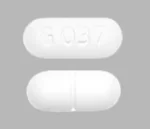
For product details such as tablet strengths and imprints, see our Ambien medication page.
Switching between them is a prescriber decision
It is natural to wonder whether Dev should simply swap his plain Ambien for the CR version, or whether Maya could save the CR tablets she got years ago. Neither should make that change alone. Here is why.
- The doses don’t line up one to one. Immediate-release comes in 5 mg and 10 mg. CR comes in 6.25 mg and 12.5 mg. Your prescriber decides the right starting point, usually the lowest effective dose.
- Next-day planning changes. Moving to CR means accepting the stronger no-driving-the-next-day advice. That may not fit someone who commutes early.
- The real problem may be something else. A switch can mask apnea, depression, pain, or a medicine that disrupts sleep.
- Taking both is never an option. Using an IR tablet and a CR tablet on the same night, or a second tablet after waking, stacks the dose and raises the risk of next-day impairment and complex sleep behaviors.
A good way to start the conversation: bring your sleep diary and say, “I fall asleep fine but wake at 3 a.m. most nights,” or “I can’t fall asleep for two hours, then I’m fine.” That framing helps your prescriber decide between Ambien vs Ambien CR, a sublingual option, CBT-I, or a mix.
Frequently asked questions
Ambien vs Ambien CR: what is the main difference?
Both contain zolpidem. Ambien releases its full dose at once and is approved for trouble falling asleep. Ambien CR has two layers: one releases zolpidem right away and one releases it more slowly, so levels stay up longer. It is approved for trouble falling asleep and/or staying asleep.
Is Ambien CR better for staying asleep?
It was designed and studied for that. In adults on 12.5 mg, Ambien CR reduced time awake after sleep onset over the first 7 hours on the first nights and over the first 5 hours after two weeks. Whether it is better for you depends on your pattern, your morning schedule, and your other health conditions.
Can you cut Ambien CR in half?
No. The label says to swallow it whole and not divide, crush, or chew it. Breaking it can release the slow layer all at once. If you need a lower dose, a 6.25 mg tablet exists. Ask your prescriber.
How long does Ambien CR last compared with Ambien?
Both reach their peak in roughly 1.5 to 1.6 hours. Plain Ambien’s levels then fall steadily with a half-life of about 2.5 hours. Ambien CR keeps levels up beyond three hours after the dose, then clears with a similar half-life (about 2.8 hours). The practical result is more coverage in the middle of the night and more chance of drug left in the morning.
Does Ambien CR cause more next-day drowsiness?
It can. FDA data showed more people with impairing morning blood levels after extended-release zolpidem than after immediate-release. The FDA advises people taking Ambien CR not to drive or do tasks that need full alertness the day after a dose.
Can I switch from Ambien to Ambien CR on my own?
No. The dose strengths differ, the next-day precautions differ, and the cause of your waking needs to be checked. Talk with your prescriber, who may also suggest CBT-I or a middle-of-the-night option instead.
Bottom line on Ambien vs Ambien CR
If you are a Maya, whose problem is the first hour or two, immediate-release zolpidem was built around your night. If you are a Dev, waking at 3 a.m. most nights, the extended-release version was built around his, at the price of a stronger next-morning warning. If your waking is occasional, a low-dose middle-of-the-night product may fit better, and if your insomnia is chronic, CBT-I deserves a place in the plan whichever pill you use. The Ambien vs Ambien CR choice is best made with your sleep diary in hand and your prescriber across the table.
This article is for general education and does not replace advice from your own doctor, pharmacist, or sleep specialist. Zolpidem is a controlled substance; never change your dose, switch products, or stop a sleep medicine without talking to the person who prescribes it.
Sources
- Sanofi-Aventis. AMBIEN (zolpidem tartrate) tablets, prescribing information and Medication Guide (NDA 019908), revised 12/2016. accessdata.fda.gov
- AMBIEN CR (zolpidem tartrate extended-release) tablets, prescribing information (NDA 021774), revised 2/2022. DailyMed, National Library of Medicine. dailymed.nlm.nih.gov
- US Food and Drug Administration. FDA Drug Safety Communication: Risk of next-morning impairment after use of insomnia drugs; FDA requires lower recommended doses for certain drugs containing zolpidem. January 10, 2013. fda.gov
- US Food and Drug Administration. FDA Drug Safety Communication: FDA approves new label changes and dosing for zolpidem products and a recommendation to avoid driving the day after using Ambien CR. May 14, 2013. fda.gov
- US Food and Drug Administration. Questions and Answers: Risk of next-morning impairment after use of insomnia drugs. fda.gov
- US Food and Drug Administration. Certain prescription insomnia medicines: New boxed warning due to risk of serious injuries caused by complex sleep behaviors. April 30, 2019. fda.gov
- EDLUAR (zolpidem tartrate) sublingual tablets, prescribing information (NDA 021997), revised 10/2014. accessdata.fda.gov
- Intermezzo (zolpidem tartrate sublingual tablet) professional monograph. Drugs.com. drugs.com
- Sateia MJ, Buysse DJ, Krystal AD, Neubauer DN, Heald JL. Clinical practice guideline for the pharmacologic treatment of chronic insomnia in adults: an American Academy of Sleep Medicine clinical practice guideline. J Clin Sleep Med. 2017;13(2):307-349. aasm.org
- American Academy of Sleep Medicine. Behavioral and psychological treatments for insomnia: patient guide (2021). aasm.org