Health Tips
Lortab vs Norco: is there a real difference?

The short verdict
Today, Lortab and Norco are two brand names for the same medicine: hydrocodone (an opioid) plus acetaminophen (the pain reliever in Tylenol). Current versions of both come in 5/325, 7.5/325, and 10/325. A Lortab 10/325 and a Norco 10/325 deliver the same amount of each ingredient.
The big historical difference was acetaminophen. Older Lortab tablets carried 500 mg per tablet, while Norco used 325 mg. Federal rules ended the higher amounts in 2014. What can still differ today is the look of the pill, the filler ingredients, the maker, the price, and whether you can find the brand at all.
Lortab vs Norco: spot the difference today
The easiest way to compare two medicines is to line them up feature by feature. When you do that with current products, most of the rows match. The table below reflects how these brands are labeled now, not how they were sold ten or fifteen years ago.
| Feature | Lortab (current label) | Norco (current label) |
|---|---|---|
| Active ingredients | Hydrocodone bitartrate + acetaminophen | Hydrocodone bitartrate + acetaminophen |
| Tablet strengths | 5/325, 7.5/325, 10/325 | 5/325, 7.5/325, 10/325 |
| Acetaminophen per tablet | 325 mg | 325 mg |
| Drug class | Opioid agonist + non-opioid analgesic | Opioid agonist + non-opioid analgesic |
| DEA schedule | Schedule II | Schedule II |
| Liquid form | Lortab Elixir existed (now hard to find) | No liquid under the Norco name |
| Brand availability | Brand reported as discontinued in the U.S. | Brand still listed, though generics fill most prescriptions |
| Boxed warnings | Same opioid class warnings plus liver warning | Same opioid class warnings plus liver warning |
Notice that the medical rows are identical. The differences sit in the business rows: who makes it, whether it is still sold, and what form it comes in. For a deeper look at what each ingredient does, see our guide to what Lortab is and how it works.
Is Lortab the same as Norco?
In every way that affects your body, yes, when you compare matching strengths. Both contain hydrocodone bitartrate, which acts on opioid receptors in the brain and spinal cord to dull pain signals. Both contain acetaminophen, which works through a different pathway and adds pain relief and fever reduction. The pairing lets a lower opioid dose do more work than it would alone.
The labels for both carry the same set of boxed warnings: risk of addiction and misuse, life-threatening slowed breathing, danger from accidental swallowing by a child, neonatal opioid withdrawal syndrome after use in pregnancy, interactions with drugs that block the liver enzyme CYP3A4, liver injury from acetaminophen, and serious risks when combined with benzodiazepines or other sedatives. You can read the full generic label on DailyMed.
Norco 10/325 vs Lortab 10/325
This is the matchup people ask about most, since 10/325 is the highest tablet strength for both. Each tablet has 10 mg of hydrocodone and 325 mg of acetaminophen. The usual adult label direction for this strength is one tablet every 4 to 6 hours as needed, with a daily cap of 6 tablets. That cap keeps the acetaminophen total under the adult limit and keeps the opioid dose within the range the label studied. Your own prescriber may set a lower cap, and some generic labels phrase the limits a little differently, so the bottle in your hand is the rule to follow.
If you want the full strength breakdown, including the 5/325 and 7.5/325 caps, our Lortab strengths guide walks through each one.
Then vs now: the acetaminophen gap that closed
If a relative told you years ago that Norco was “the stronger one” or “easier on the liver,” they were not imagining things. The two brands really were different back then, but not in the way most people assumed.
The 500 mg era
Older Lortab tablets paired hydrocodone with 500 mg of acetaminophen. You would see strengths printed like 5/500, 7.5/500, and 10/500. Norco took a different path and paired the same hydrocodone amounts with 325 mg of acetaminophen. So a Norco 10/325 and an old Lortab 10/500 had the same opioid dose, but the Lortab tablet carried 175 mg more acetaminophen.
That gap mattered most for people who took several tablets a day. Six tablets of a 500 mg product adds up to 3,000 mg of acetaminophen before you count any Tylenol, cold medicine, or sleep aid. The same six tablets of a 325 mg product total 1,950 mg. That leaves a much wider safety margin under the 4,000 mg adult daily maximum.
What changed in 2011 and 2014
In January 2011, the FDA asked drug makers to cap acetaminophen in prescription combination products at 325 mg per tablet or capsule by January 14, 2014. When that date arrived, the agency went further and asked prescribers and pharmacists to stop prescribing and dispensing products above 325 mg. The FDA said there was no evidence that the extra acetaminophen gave enough added pain relief to justify the liver risk.
The concern was real. According to the FDA, unintended overdoses involving prescription combination products accounted for roughly half of acetaminophen-related liver failure cases in the United States. Most liver injury cases involved more than 4,000 mg a day, and many involved people taking more than one acetaminophen product without realizing it.
Later in 2014, a second change landed. The DEA moved every hydrocodone combination product from Schedule III to Schedule II, effective October 6, 2014. The final rule in the Federal Register explains the reasoning, which centered on misuse and diversion. Both Lortab and Norco were caught by that rule equally.
Old bottle in the cabinet? If you find a leftover bottle labeled 5/500, 7.5/500, or 10/500, do not take it or mix it with a current prescription. Those strengths are no longer dispensed, and the extra acetaminophen changes your daily math. Ask your pharmacist about a drug take-back option near you.
Retired strengths at a glance
| Product | Typical older strengths | Status |
|---|---|---|
| Lortab tablets (older) | 5/500, 7.5/500, 10/500 | Discontinued; replaced by 325 mg versions |
| Lortab Elixir (older) | 7.5 mg/500 mg per 15 mL, with 7% alcohol | Discontinued; later version used 10 mg/300 mg per 15 mL |
| Norco tablets | Already used 325 mg acetaminophen | Strength format unchanged by the 2014 limit |
So when people ask which is stronger, Lortab or Norco, the honest answer has two parts. On the opioid side, matching strengths have always been equal. On the acetaminophen side, old Lortab carried more, which made it riskier for the liver rather than better for pain.
What can still differ between Lortab and Norco
Even with identical active ingredients, two products are not carbon copies. Here is what can legitimately vary from one bottle to the next, whether the label says Lortab, Norco, or a generic maker’s name.
Inactive ingredients and dyes
Every tablet includes fillers, binders, and sometimes coloring that help it hold its shape and break down properly. Common examples include cellulose, starch, magnesium stearate, and various dyes. These ingredients do not relieve pain, but they matter if you have a specific allergy or intolerance, such as a reaction to a particular dye. If you have ever reacted to a medication’s coloring, ask the pharmacist to check the inactive ingredient list on each new fill.
Tablet shape, color, and imprint
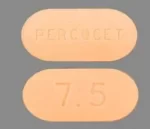
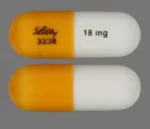
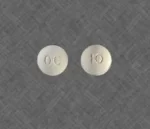
Each manufacturer gives its tablet a distinct look and an imprint code. That code is how pharmacists, poison centers, and emergency staff identify a pill on sight. Two tablets with the same strength can be different colors and shapes. A changed appearance is one of the most common reasons people call a pharmacy, and it is a good reason to call. Never assume a pill is correct just because it looks “close enough.”
Manufacturer
Brand-name products come from the company that holds that trademark. Generics come from many different companies, and your pharmacy may switch suppliers based on cost or stock. That is why one month’s refill may come from one maker and the next from another, even though your prescription never changed.
Price and insurance coverage
Brand names usually cost more. Many insurance plans cover the generic at a lower copay and charge more, or refuse coverage, for the brand unless your doctor shows a medical need. For most people, generic hydrocodone with acetaminophen is the most affordable option, and it delivers the same active ingredients.
Availability
According to Drugs.com, the Lortab brand name has been discontinued in the U.S. That does not mean the medicine was banned or recalled. It means the brand is no longer marketed under that name, and generic versions with the same ingredients took over. A prescription written as “Lortab” is normally filled with a generic hydrocodone and acetaminophen product unless the prescriber specifies otherwise. Norco as a brand has been easier to find, but here too, most prescriptions are filled with generic Norco equivalents.
Why do I feel different on a new refill?
This is one of the most common worries in the Lortab vs Norco conversation. You switch from one bottle to another and the relief feels weaker, or the drowsiness feels stronger. Are the pills really different? Usually not in any way that matters, but your experience is still worth taking seriously.
How generic equivalence works, in plain words
Before a generic can be sold, the FDA requires the maker to show that it is bioequivalent to the original product. In simple terms, researchers give the generic and the reference product to healthy volunteers and measure how much drug reaches the blood and how fast. The results have to fall within a tight statistical window around the reference product. The generic must also have the same active ingredient, strength, dosage form, and route.
That system is designed so that switching between approved versions should not change how well the medicine works. Large, careful comparisons have generally found that approved generics perform like their brand counterparts. Real, measurable differences between two approved tablets of the same strength are rare.
Other reasons a dose may feel different
- Your pain changed. Pain after surgery or an injury rises and falls. A tablet that felt weak on day four may be meeting a flare, not a weaker pill.
- Timing. Hydrocodone has a half-life of about 4 hours. Taking a dose later than usual, or after pain has already peaked, can make it seem less effective.
- Food. A large meal can change how quickly a tablet is absorbed, shifting when relief starts.
- Other medicines. Starting a new antibiotic, antifungal, or other drug that affects liver enzymes can raise or lower hydrocodone levels. Grapefruit can do this too.
- Tolerance. After days or weeks of steady use, the same dose may simply do less. That is a reason to talk with your prescriber, not to take extra.
- Expectations. A pill that looks unfamiliar can make you doubt it. That doubt can genuinely shape how you feel relief.
If a new fill truly seems off, write down what you notice and when, and call your pharmacist. They can confirm the product is correct and, if needed, report a quality concern. What you should never do is take an extra tablet to make up the difference. That is how people slide past the acetaminophen limit or into dangerous sedation.
Call 911 right away if someone taking hydrocodone is very hard to wake, breathing slowly or making snoring or gurgling sounds, or has blue or gray lips. Give naloxone if you have it. Naloxone nasal spray is now sold over the counter.
Pharmacy substitution and Schedule II refill rules
Because both products are now Schedule II controlled substances, the rules at the counter are stricter than they are for many other prescriptions. Knowing them ahead of time can save you a frustrating trip.
Can the pharmacy swap brands?
In most states, pharmacists can fill a brand-name prescription with an approved generic unless the prescriber marks it “dispense as written” or “brand medically necessary.” Substitution rules vary from state to state. In practice, a Lortab prescription today is almost always filled with generic hydrocodone and acetaminophen, and a Norco prescription is often filled the same way. If you have a documented reason to need a specific product, ask your prescriber to note it on the prescription.
No refills on Schedule II
Schedule II prescriptions cannot carry refills. Each time you need more, your prescriber has to issue a new prescription. Many states also require these prescriptions to be sent electronically, and many limit how many days of opioid medicine can be prescribed at once for short-term pain. Running out on a weekend is a real risk, so plan ahead with your prescriber if your pain is expected to last.
Why the pharmacy may ask questions
Pharmacists check state prescription monitoring databases and may ask about other pain medicines, recent surgeries, or the doctor who wrote the prescription. This is routine and is meant to protect patients. Being open about every medicine you take, including over-the-counter acetaminophen, helps them catch dangerous overlaps.
Questions to ask your pharmacist
A two-minute conversation at pickup can answer almost every Lortab vs Norco question for your own prescription. Consider asking:
- What strength is this, and how much acetaminophen is in each tablet?
- What is the most I can take in 24 hours according to this label and my prescription?
- Do any of my other medicines, including cold, flu, or sleep products, contain acetaminophen?
- Do any of my current medicines interact with hydrocodone, especially sedatives, sleep aids, or muscle relaxants?
- This tablet looks different from my last fill. Can you confirm it is the same medicine and strength?
- Does this product contain any dye or inactive ingredient I have reacted to before?
- Should I keep naloxone at home while I take this medicine?
- How should I store this, and how do I dispose of leftover tablets?
You can also bring a written list of every medicine and supplement you take. Pharmacists are often the fastest way to spot a hidden acetaminophen source or a risky interaction.
Where Vicodin fits in the hydrocodone brand names
Lortab and Norco are not the only hydrocodone brand names people remember. Vicodin is probably the most famous of the group. It also combines hydrocodone with acetaminophen, and its brand line went through the same acetaminophen reduction as the others. In its later versions, Vicodin used 300 mg of acetaminophen per tablet rather than 325 mg, so the labels looked slightly different. Like Lortab, the Vicodin brand is now hard to find, and generics dominate.
Here is a simple way to think about the family:
| Brand name | Ingredients | Notable history |
|---|---|---|
| Lortab | Hydrocodone + acetaminophen | Once used 500 mg acetaminophen; also sold as a liquid elixir |
| Norco | Hydrocodone + acetaminophen | Used 325 mg acetaminophen before the 2014 limit |
| Vicodin | Hydrocodone + acetaminophen | Moved from 500 mg to 300 mg acetaminophen in later versions |
If you are comparing those names specifically, our side-by-side pages on Vicodin vs Norco and Lortab vs Vicodin go into more depth. To understand how the generic name relates to the brands, see hydrocodone vs Norco.
What about oxycodone products?
Percocet is sometimes lumped in with these brands, but it is a different opioid. It pairs oxycodone with acetaminophen. Using CDC 2022 conversion factors, oxycodone is about 1.5 times as potent as hydrocodone milligram for milligram. That means a 10/325 Percocet and a 10/325 Norco are not equal on the opioid side, even though the acetaminophen amount matches. You can compare them in Percocet vs Norco, Norco vs oxycodone, and our new guide to Lortab vs Percocet. Switching between hydrocodone and oxycodone is never a one-for-one trade and should only be done by a prescriber.
Safety rules that apply under either name
Because the medicine inside is the same, the safety habits are the same too. Whatever your label says, these rules protect you:
- Count every source of acetaminophen. Stay within the adult maximum of 4,000 mg a day from all sources, and lower if your prescriber says so.
- Do not drink alcohol while taking hydrocodone. It adds to sedation and slowed breathing, and it strains the liver alongside acetaminophen.
- Avoid mixing with benzodiazepines, sleep medicines, or other sedatives unless your prescriber has planned for it and is watching closely.
- Do not drive or operate machinery until you know how the medicine affects you.
- Store tablets out of reach and out of sight. A single tablet swallowed by a child can be life-threatening.
- If you have used it daily for more than a few days, ask about tapering rather than stopping suddenly. The CDC 2022 opioid prescribing guideline emphasizes individualized plans and close follow-up.
- Watch for signs that use is becoming hard to control. Our guide to hydrocodone addiction explains the warning signs and treatment options.
If you are facing a workplace or pre-procedure drug screen, note that tests look for hydrocodone and its breakdown products, not the brand name. Our guide on how long hydrocodone stays in your system covers detection windows.
Frequently asked questions
Is Lortab the same as Norco?
Yes, for current products at matching strengths. Both contain hydrocodone bitartrate and acetaminophen, both now use 325 mg of acetaminophen per tablet, and both are Schedule II. Differences are limited to appearance, inactive ingredients, maker, price, and availability.
Which is stronger, Lortab or Norco?
Neither is stronger when the numbers on the label match. A 10/325 tablet of either brand contains 10 mg of hydrocodone and 325 mg of acetaminophen. Years ago, Lortab had more acetaminophen per tablet, which raised liver risk but did not make it a stronger opioid.
What is the difference between Lortab and Norco today?
The practical difference between Lortab and Norco today is mostly commercial. The Lortab brand has been discontinued in the U.S., while Norco is still listed, and both are commonly filled with generics. Pill color, shape, imprint, and filler ingredients vary by manufacturer.
Is generic Norco as effective as the brand?
FDA-approved generics must contain the same active ingredients at the same strength and show bioequivalence to the brand. For most people, a generic hydrocodone and acetaminophen tablet works the same as brand Norco. If you notice a real change after switching, tell your pharmacist so they can check the product.
Why does my Norco or Lortab look different this month?
Pharmacies often change generic suppliers, and each maker uses its own color, shape, and imprint code. A new look does not mean a different strength, but you should always confirm it with your pharmacist. They can match the imprint to the product and strength on your label.
Can I get refills on Lortab or Norco?
No. Since October 6, 2014, all hydrocodone combination products have been Schedule II, which means prescriptions cannot include refills. Your prescriber must issue a new prescription each time, and state rules may add limits on quantity or require electronic prescribing.
Can I take Tylenol with Lortab or Norco?
Only if your prescriber or pharmacist says it is safe and you count the total. Every Lortab or Norco tablet already contains 325 mg of acetaminophen, the same ingredient in Tylenol. Adding more without tracking it is a common path to accidental liver damage.
Was Lortab banned?
No. The Lortab brand was discontinued, which is different from a ban or recall. The higher-acetaminophen versions were phased out after the FDA’s 325 mg limit, and generic hydrocodone with acetaminophen remains widely prescribed.
The bottom line on Lortab vs Norco
When you compare Lortab vs Norco today, you are comparing two names for one medicine. The 500 mg acetaminophen gap that once separated them closed in 2014, and both moved to Schedule II the same year. What changes from bottle to bottle is the maker, the look of the tablet, the fillers, and the price. Focus on the numbers printed on your label, keep a running count of acetaminophen, and let your pharmacist confirm anything that looks unfamiliar.
This article is for general education and is not medical advice. Do not start, stop, or change any medicine without talking to your prescriber. Hydrocodone with acetaminophen is a controlled substance and should only be used with a valid prescription, exactly as directed. If you think someone has overdosed, call 911 immediately. For questions about a possible acetaminophen overdose, call Poison Control at 1-800-222-1222 or visit Poison.org. If you or someone you love is struggling with opioid use, the SAMHSA National Helpline is free, confidential, and available 24/7 at 1-800-662-4357.
Sources
- Drugs.com: Lortab (brand discontinued note)
- DailyMed: Hydrocodone bitartrate and acetaminophen tablets, prescribing information
- Federal Register: Rescheduling of hydrocodone combination products to Schedule II (2014)
- CDC Clinical Practice Guideline for Prescribing Opioids for Pain, 2022
- Poison Control (National Capital Poison Center)
- SAMHSA National Helpline